
Go to main content
Return
  • Lecture / meet

  • Irlande

More Irish than the Irish Themselves Lecture Series

April 03 2027 from 10:00 AM to 4:00 PM

ddf8058f7998fe476e9d01c7.71043438.jpg

More Irish than the Irish Themselves Lecture Series
One Day Seminar


Lecture 1:  The origins of Tipperary's Normans
Synopsis: It is well known that the Anglo-Norman conquest of what would soon become the county of Tipperary got underway in earnest in the aftermath of the expedition to Ireland in 1185 of the future King John. And it is also well known that much of the work of conquest was undertaken by William de Burgh, ancestor of the Burke family, and Theobald Walter, ancestor of the Butlers. But Tipperary was not merely conquered by these Normans, it was colonised by them – because a royal charter granting its lucky recipient a vast tract of land in Ireland's Golden Vale was nothing more than a piece of parchment unless it was followed up by boots on the ground, and the introduction of new settlers and new settlements. This lecture examines the conquest of Tipperary, where its would-be conquerors hailed from, and who the newcomers were who would make Tipperary their home.

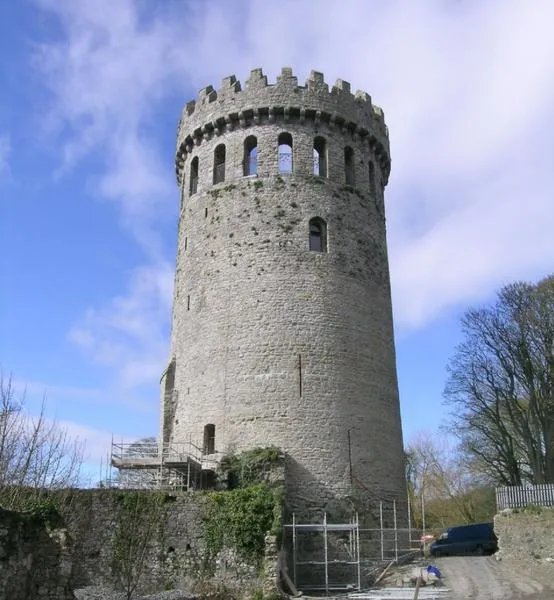
Lecture 2: 12th and 13th Century Castles of Tipperary
Synopsis: This lecture concentrates on the twelfth and thirteenth-century castles built by the Anglo-Normans in Country Tipperary with special emphasis on those that are prominent national monuments – the castles of Nenagh, Roscrea and Cahir. Nenagh has a particularly fine circular keep, one of the finest of its type in Ireland or Britain. Roscrea and Cahir are also fine examples of medieval castles. Parallels in Ireland, Britain and France will be discussed. Earthwork castles such as the motte and bailey at Knockgraffon and hall-houses such as the fine example in Mullinahone will also be discussed.

Lecture 3: the Anglo-Norman church in Tipperary: organisation, architecture, heritage
Synopsis:  This lecture explores the contribution of the Anglo-Normans to the Church in Tipperary from the late 12th century to the second half of the 13th century. It considers the role of the newcomers in the creation of a parish system, in the patronage of Augustinian monasteries, in the introduction of mendicancy, and in episcopal politics. The built environment is emphasised (and explained) throughout, for the Tipperary landscape possesses the most evocative reminders of the impact of the 1169 invasion on the county.

Lecture 4: Inventing Anglo Norman Surnames
Synopsis: The names of the Anglo-Norman invaders and settlers reveal much about their complex identities. Although we call them Normans, many had lived in Britain for generations. Most hadn’t yet developed fixed hereditary surnames, their names were derived from patronyms (fathers/ grandfathers), toponyms (places), occupations or even personal characteristics.
In contrast, the Gaelic-Irish elite were the first in Europe to adopt hereditary surnames and maintained rich genealogical traditions linking families to ancestors and territories. 
This talk explores what the names of invaders and settlers reveals about their origins, identities and how they adapted to life in medieval Ireland.

Practical informations :

General public

6 hours

Contact

Tipperary County Council Chamber, Clonmel

17 Emmet Street, Clonmel, Tipperary E91 VY93, Ireland

Other events