
Go to main content
Return
  • Heritage, events & knowledge

  • Normandie

Conferences - Abbot Robert de Grandmesnil

20 March 2027

Architecture between Normandy, Sicily, and Calabria,
Cycle of 3 conferences around Robert de Grandmesnil.


These conferences explore the connections between Normandy and southern Italy in the 11th century through the figure of Robert de Grandmesnil. The settlement of Danes and Norwegians in Neustria in the 10th century, which led to the duchy of Normandy, permanently transformed the political balances of medieval Europe and facilitated the emergence of a powerful Norman aristocracy tied to the major European dynasties.

In the 11th century, Normandy experienced deep power struggles, particularly after the successions of Richard III, Robert the Magnificent, and William the Conqueror. These tensions pitted supporters against opponents of the new duke. At the same time, population growth and lack of land pushed many Normans south to Italy, where they initially engaged as mercenaries before permanently settling there.

Among them were the Hautevilles, including Robert Guiscard and Roger I. The latter, having become count of Sicily and Calabria, led the conquest of Sicily starting in 1061 and laid the foundations for a new Norman state in the Mediterranean. From his bases in Calabria and Sicily, he developed an important political, religious, and urban network marked, in particular, by the founding of cathedrals and monastic institutions.

One of the major players in this history is the Benedictine Robert de Grandmesnil. Coming from a family involved in the re-founding of the abbey of Saint-Évroult-en-Ouche, of which he was abbot until 1059, he left Normandy following disagreements with William the Conqueror. Settled in southern Italy, he became abbot of Sainte-Euphémie and played a crucial role in the development of Latin monasticism in Sicily and Calabria. His actions accompanied the policies of Roger I, who also married Judith of Évreux, Robert de Grandmesnil's half-sister.

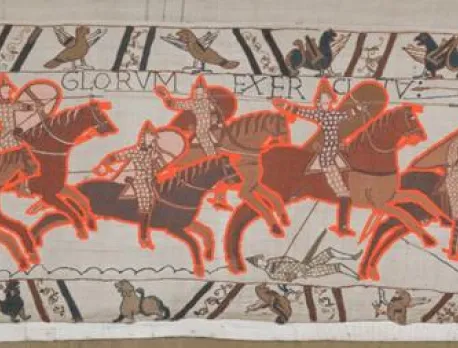
Through the intersecting paths of William the Conqueror, victor of the Battle of Hastings in 1066, and Roger I of Hauteville, a key figure in the conquest of Sicily, this cycle highlights the movements of people, ideas, and influences between Normandy and the Mediterranean. It also demonstrates how political exiles, territorial ambitions, and monastic networks contributed to the rise of Norman power in Europe in the 11th century.

Practical Information:
Open to the public
Free
Contact

Partnership: Association On the Paths of the Abbey of Saint-Evroult-en-Ouche

Abbaye de Saint-Evroult - Notre Dame du Bois

79 Route D'échauffour, 61550 Saint-Evroult-Notre-Dame-du-Bois, France

Other events