
Go to main content
Return
  • Contemporary creation

  • Normandie

Interwoven

from 15 October 2027

to 31 December 2027

9fd526829cefac0ac13910e0.67988395.jpg

Savagery and sweetness, Women's powers linked to textiles in the face of Norman conquest.


Interwoven is an exhibition dedicated to the techniques and women's knowledge related to textiles, endangered during the time of William the Conqueror and reactivated in contemporary works. The exhibition is the result of a series of residencies in France, the United Kingdom, and Ireland.


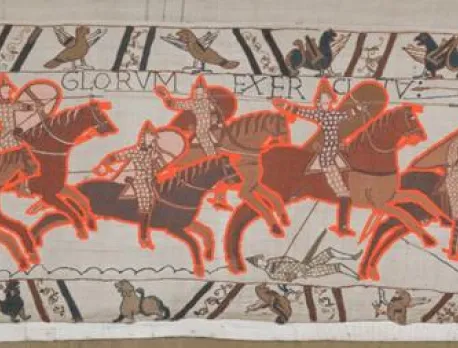
Initiated by Alice Schÿler Mallet (Artist and exhibition curator, Association Cybèle), Julie Faitôt (Director of the Shed in Rouen), Rosie Hermon (Independent curator in London), and Lize Whitehead (Fabrica in Brighton), the Interwoven artist residency project resonates with the creation of the missing scene of the Bayeux Tapestry, imagined by the artist Hélène Delprat in collaboration with the Mobilier national.


The Norman Conquest introduced patriarchy in England, inscribing the subordination of women into law, religion, and philosophy, while delivering one of the first blows to the "Commons" (common spaces) through enclosures. On the surface, the Bayeux Tapestry celebrates a masculine history of conquest and appropriation. Over more than 70 meters, only five women are represented (compared to 632 men), all threatened or victims of violence. Yet, beyond the destructive actions of kings, bishops, and knights embroidered on its surface, lie the hands of anonymous women who sewed it. Ultimately, the tapestry bears witness to their work, know-how, and creativity.


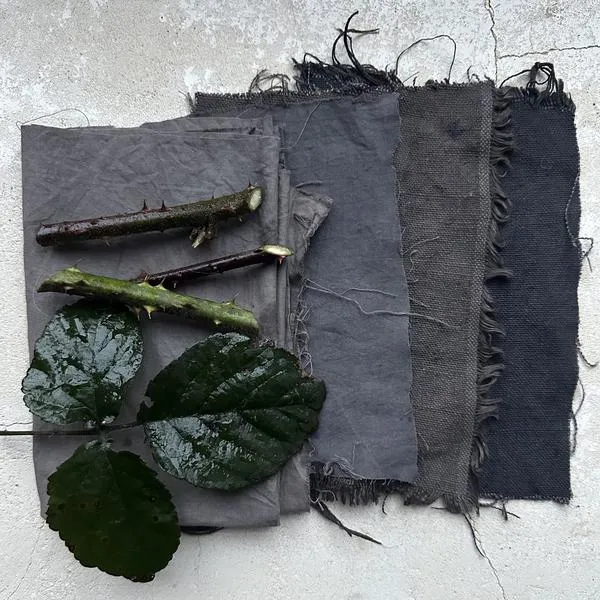
Interwoven explores the practical and symbolic power embodied in women's textile traditions, dating back to prehistory, as well as the knowledge of plants, the stories, and the magical practices that accompanied them. Community knowledge about how to gather and transform local fibers and plants to meet material and spiritual needs has been passed down from generation to generation. However, in modern times, these forms of knowledge have been deemed outdated — even a source of shame — and are at risk of disappearing completely today. As patriarchy continues to enclose, exploit, and pollute the planet's resources at an accelerated pace, reconsidering these slow, attentive, and emancipatory practices becomes not only an act of preservation but also a gesture of feminist resistance and the manufacturing of new worlds.


New works are created in response to the traces of women's power and ancestral knowledge inscribed in archaeological textiles, to the botanical knowledge whispered through Anglo-Saxon charms, as well as to the bodily memory carried by the ancient gestures of braiding, spinning, weaving, and dyeing, but also by basketry and wild pottery.


All audiences

Free


Cooperation France / United Kingdom / Ireland

Partnerships: Fabrica Brighton, Maison des Arts Solange, Beaudoux, Shed Rouen

Maison des Arts Solange Baudoux, Evreux

Rue De Grenoble, 27000 Évreux, France

Other events